Big-Picture Questions, Part 1
Magic designer Mark Rosewater answers broad community questions about card design, game formats, and fundamental rules. He explains why functional reprints exist, discusses potential new casual formats, and reflects on historical card type decisions.

- Mark Rosewater answered broad community questions in a mailbag article.
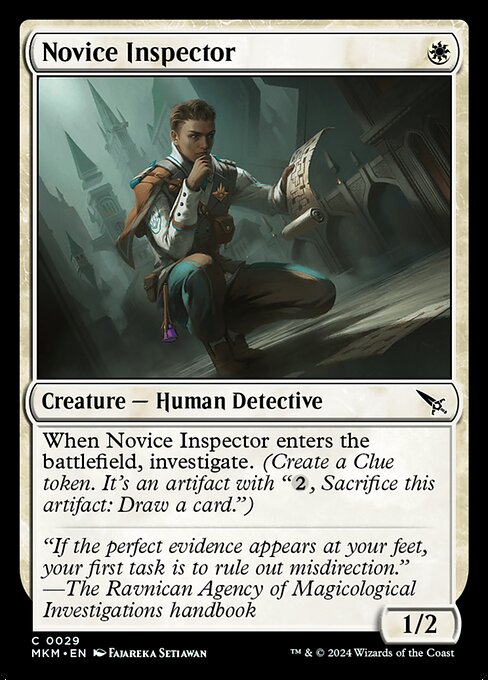
- Functional reprints like Novice Inspector are vital for set design balance.
- Commander is the top tabletop format, but overall 1v1 play remains larger.
- R&D is investigating potential new casual formats for two-player Magic.
The Need for Functional Reprints
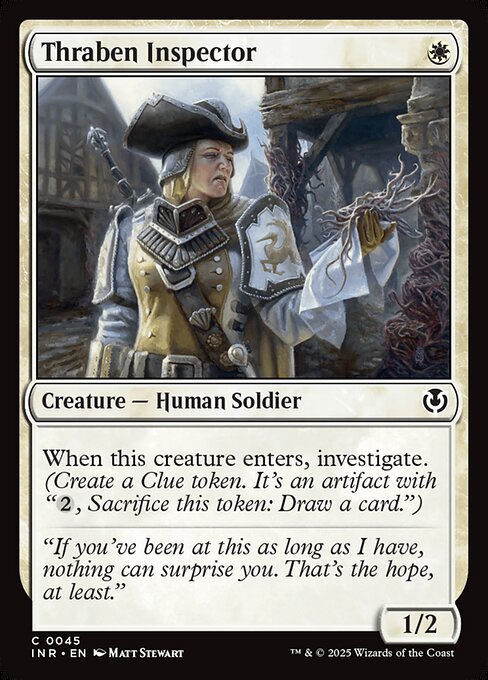
When designing new sets, the development team prioritizes the health and needs of upcoming releases over the historical card pool of older formats. Card names like Thraben Inspector tie a card's flavor to a specific plane, such as Innistrad. When a mechanics set like Murders at Karlov Manor needs that exact balance of mana and power, designers create a generic functional equivalent like Novice Inspector rather than being constrained by world-building lore.
While this approach introduces duplicate effects into non-rotating constructed environments, format-specific ban lists exist to handle power outliers. Balancing limitations for vast formats like Pauper or Pioneer should not prevent designers from using proven, well-balanced card designs in modern releases.
Format Variance and Play Patterns
Commander stands as the most popular tabletop format in Magic, but total game volume across digital platforms and casual settings still favors traditional two-player matches. The high variance of a 100-card singleton deck creates unique gameplay experiences, whereas four-card limit constructed formats emphasize competitive skill and consistency.
Research and Development continues to explore how variance impacts player enjoyment. Rather than altering established 60-card tournament rules, designers are actively researching potential new casual formats specifically built for two players.
Card Types and Core Rules
The division between card types stems from early design choices made by game creator Richard Garfield. While lands and creatures serve distinct gameplay functions, the boundary between artifacts and enchantments is largely flavor-based, separating physical objects from mystical phenomena. Early balance lessons proved that powerful colorless artifacts could easily homogenize constructed formats if left unchecked.
Similarly, the timing distinction between an instant and a sorcery was chosen to clearly communicate when spells could be played. While modern design might treat instant as a supertype or order generic mana symbols differently, decades of existing cards make major systemic overhauls impractical due to established game consistency.