Design Files: Fifth Dawn, Part 1
Magic designer Mark Rosewater shares behind-the-scenes handoff documents from the development of Fifth Dawn. Read on to discover how iconic cards like Trinket Mage and Serum Visions evolved from initial design concepts into finished tournament staples.
- Mark Rosewater reveals original design handoff files for Fifth Dawn.
- The article breaks down white and blue cards, showing early names and playability shifts.
- Covers classic cards such as Serum Visions, Trinket Mage, and Leonin Squire.
- Details how R&D managed power level concerns following earlier Mirrodin block sets.
Safer Design Themes for Mirrodin
After the power issues presented by Mirrodin and Darksteel, the design team for Fifth Dawn needed to pivot. Led by Mark Rosewater alongside developer Randy Buehler, the team created mechanics that interacted with low-cost artifacts instead of pushing raw efficiency. These cards targeted artifacts with a mana value of one or zero, internally referred to by the team as cogs.
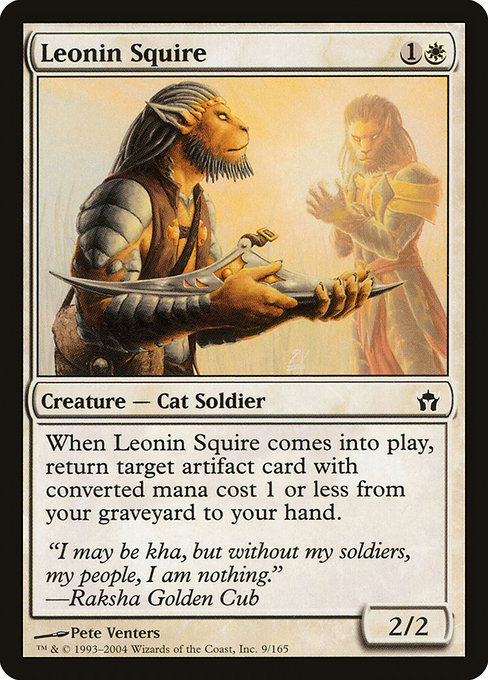
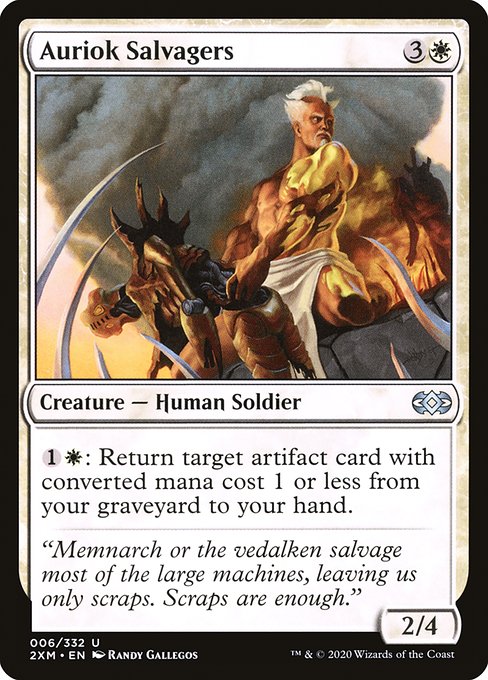
One surviving example of this focus is Leonin Squire, originally named Treasure Finder, which allowed players to pick up cheap cogs from the graveyard. Another familiar white creature, Auriok Salvagers, expanded on this idea by turning the recursion ability into an activated effect. Designers also experimented with Equipment-matters cards like Steelshaper's Gift, which originally possessed the scry mechanic before being simplified into a cheap tutor sorcery.
White Cards and Early Mechanics
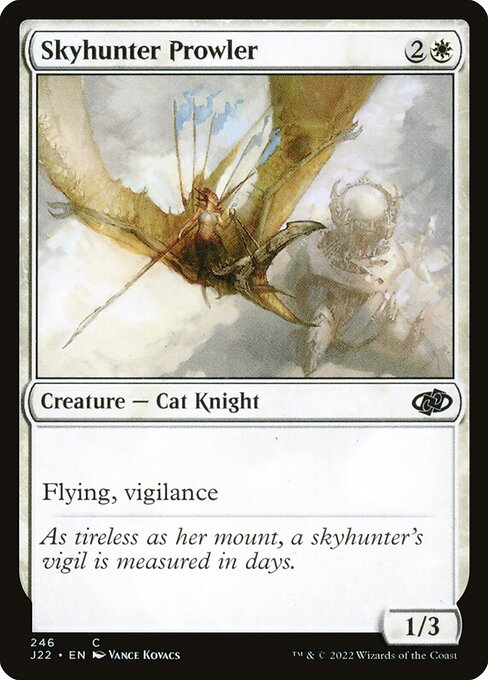
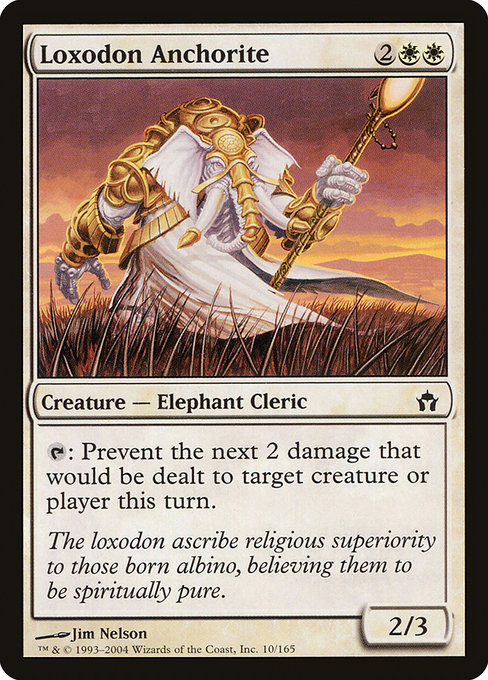
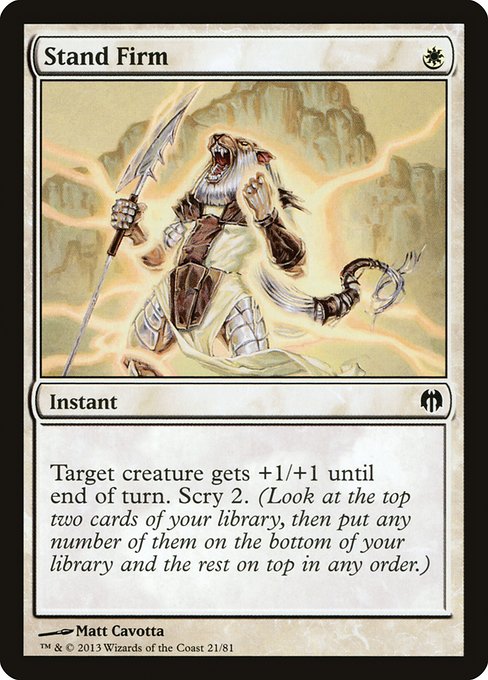
The white handoff file contained a surprisingly high number of cards that made it directly to print with minimal changes. Cards like Stand Firm and Skyhunter Prowler retain their original functional text, though vigilance had not yet been codified as an official keyword during initial development. Other designs were tweaked to lower complexity; Loxodon Anchorite was tweaked from a soldier to an elephant cleric while preserving its damage prevention activated ability.
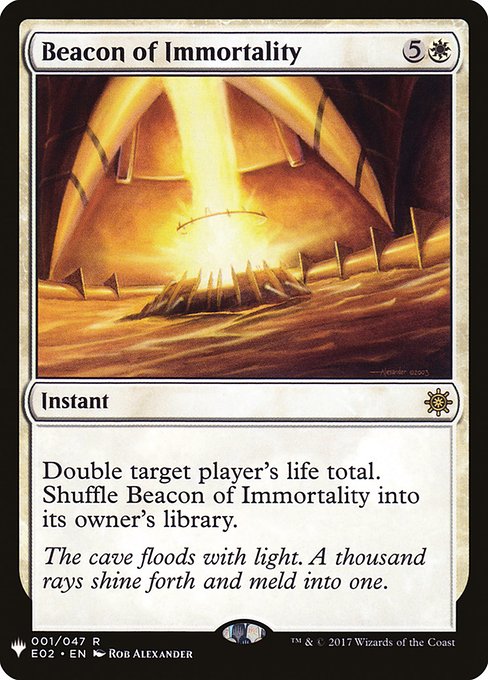
Some designs were removed entirely or saved for future releases. An instant named Dispose offered unconditional attack-based exile, a straightforward removal spell that would not make its official debut in that exact form until Murders at Karlov Manor. Meanwhile, the powerful life-doubling effect of Beacon of Immortality was born in this design file under the draft name Life Blast as part of a recurring spell cycle.
Blue Innovations and Staples
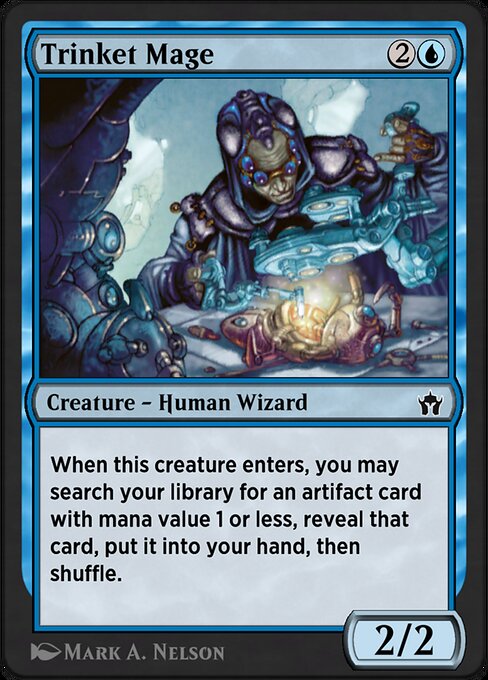
The blue portion of the file introduced legendary utility cards that fundamentally shaped competitive formats. Trinket Mage was created under the name Cog Prestidigitator, giving blue decks an efficient tool for fetching cogs directly out of the library. It ultimately inspired a legacy of similar tutor creatures across modern design.
Low-cost library manipulation also saw massive upgrades in this file. Serum Visions was designed as a simple card-draw spell featuring scry, a mechanic created by Aaron Forsythe that quickly earned him a full-time position in R&D. Condescend similarly combined countermagic with scry to give blue players flexible options without causing the severe balance headaches of high-power affinity cards like Qumulox or Blinkmoth Infusion.