Enter the Echoverse with Reality Fracture Design
Set design lead Yoni Skolnik explores how the alternate-reality concept of Reality Fracture was built using paired legendary creatures in every booster pack. Learn how the team balanced draft archetypes, narrative twists, and mechanical mirroring for these echoed pairs.
- Reality Fracture releases globally on October 2, 2026.
- Every booster pack includes a paired set of legendary creatures called an echoed pair.
- The set rebalances uncommon counts to include 66 uncommon legendary cards.
- Draft themes link to five Hexhaven schools and five original Lorwyn planeswalkers.
Designing Duality for Every Booster
Crafting a set centered on alternate realities can easily confuse casual fans, a problem seen historically in sets like Time Spiral. To keep the set approachable, design leads anchored the release on three main pillars: guaranteed mirrored pairs in every pack, a focus on five Hexhaven schools, and alternate versions of the classic Lorwyn planeswalkers.
The core gimmick of placing a pair of legendary creatures in every single booster forced dramatic changes to traditional set structures. booster packs actually feature three total legends per pack to maintain correct collation. As a result, over half of the set's uncommon tier is made up of legendary creatures, forcing designers to trim common card slots and rebalance how draft archetypes work.
Structuring Drafts Around Legends
With so many legendary creatures floating through draft packs, designers had to ensure individual colors possessed flexible core themes rather than rigid color-pair requirements. Legendary cards set on the plane of Hexhaven interact directly with central draft strategies, while alternate-reality versions of classic characters portray home-plane origins.
To make 66 uncommon legends play smoothly in Limited environments, many creatures were given functional noncreature roles. Some feature flash to act as combat tricks, while others offer flexible enters-the-battlefield removal options. A few noncreature enchantment cycles were even converted directly into paired uncommon legends to keep gameplay flowing seamlessly.
Narrative and Mechanical Mirrors
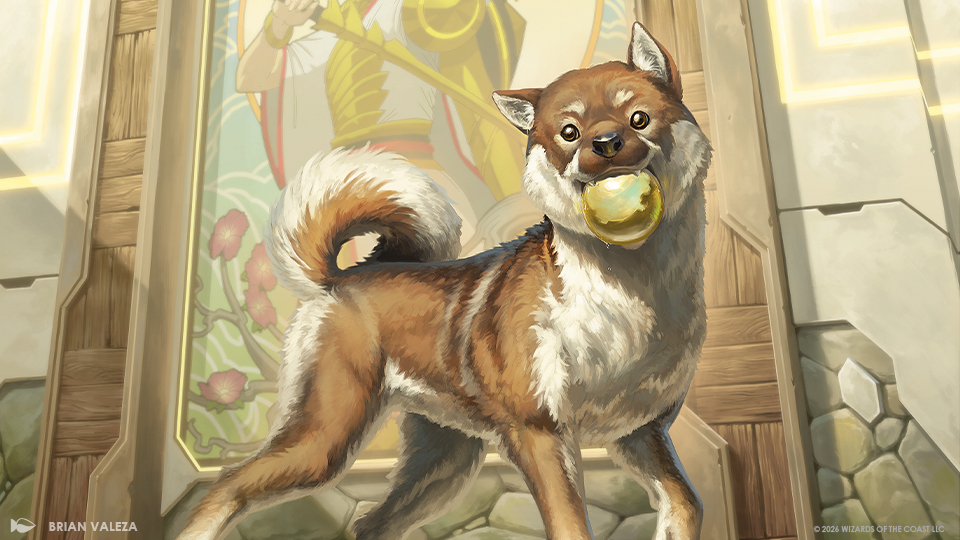
Creating effective mirrored pairs required defining specific similarities and contrasts rather than relying on total opposites. A classic example like Yargle, Glutton of Urborg works by shifting a high-power, low-toughness vanilla creature into a low-power, high-toughness wall. Similarly, Jiang Yanggu retains his identity through his connection to his hound, whether defined by the dog's presence or its tragic loss.
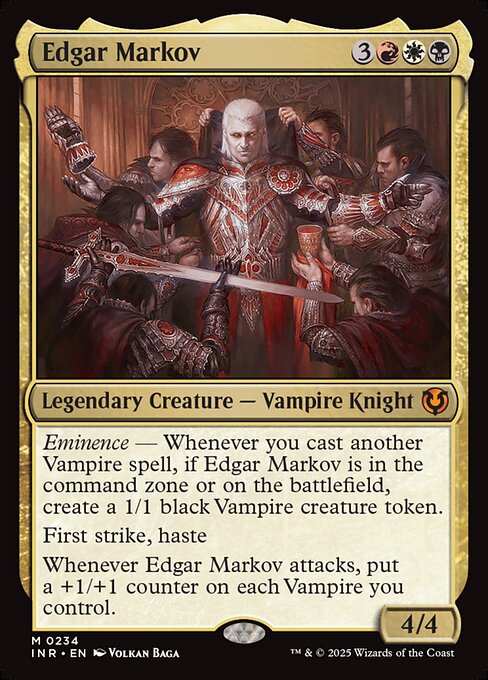
Edgar Markov offers another strong example of narrative mirroring by shifting his vampiric origins into an alternate takes on werewolf lore. Mechanically, paired cards are built so they retain the feel of original printings without forcing a drafter to pick both cards for a single deck, ensuring healthy competition around the draft table.
Refining Yoshimaru across Realities
The design journey of Yoshimaru, Ever Faithful showcases how these mirrored mechanics evolved. An early playtest concept swapped the loyal dog into a legend-hating cat. While humorous, shifting species diluted the idea that players were seeing the exact same character from a parallel world.
The final implementation relies on a Prince and the Pauper narrative contrasting rich street dogs against royal palace hounds. One version focuses on legendary permanents and counters, while its green counterpart mirrors those mechanics by caring about nonlegendary cards and providing cheap fight-based removal for draft environments.