
Introducing In-Game Player Reporting
MTG Arena is introducing an integrated player reporting system to foster a safer gaming environment. Players can now flag disruptive behavior directly within the client across multiple menus starting with the August 18, 2026 update.
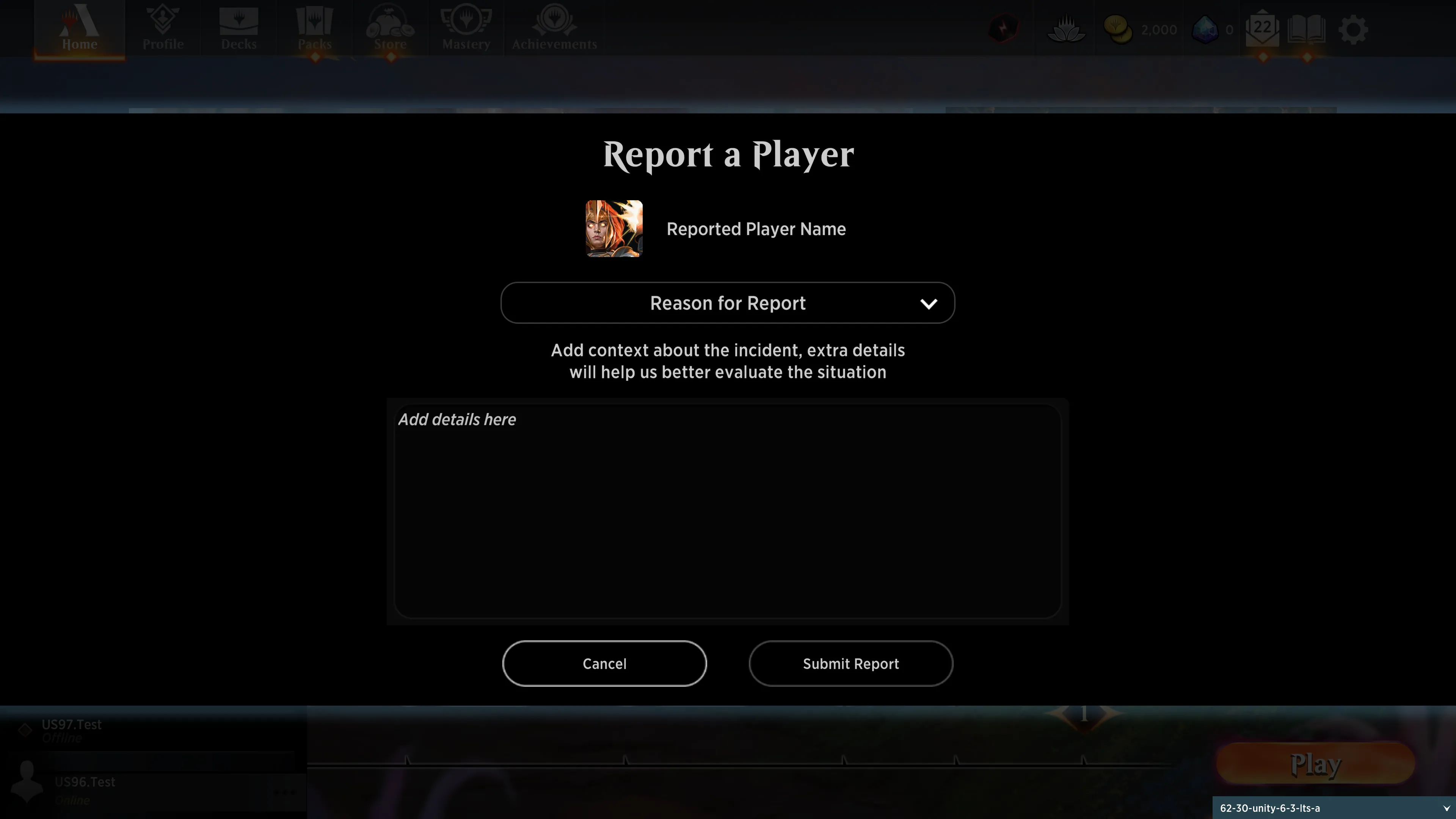
- In-game player reporting arrives in MTG Arena on August 18, 2026.
- Reports can be filed via Options, Challenge Lobbies, and Friends Lists.
- Categories include inactivity, hate speech, inappropriate names, verbal abuse, and spamming.
- Wizards of the Coast partnered with moderation platform GGWP to queue reports.
New Moderation Tools Coming Soon
Digital Magic play is expanding its community tools by building moderation mechanisms directly into the client. Starting with the mid-August game update, players will no longer need to navigate to external support websites to notify customer care about disruptive opponents or abusive interactions.
The goal of this initiative is to prepare the platform for expanded social interactions while keeping matches friendly and secure. Providing native tools allows the support team to gather context quickly and address bad actors efficiently.
Where to Submit Reports
Players can trigger a report from three distinct areas within the client. The primary Options menu will feature a dedicated button right beside the bug submission link for quick access mid-match.
Alternative entry points include the Challenge Lobby, where options reside directly under player avatar cards, and the Friends List. Accessing a user's context menu in the social sidebar allows instant reporting alongside traditional blocking and unfriending options.
Report Categories and Processing
When opening the report interface, users can choose a specific category from a dropdown menu and provide extra context. Categories cover match stalling, abusive language, hate speech, inappropriate display names, and spam or solicitation attempts.
To manage incoming submissions, the developer has integrated GGWP, an established industry moderation service. This platform organizes incoming data and routes cases into queues, ensuring human support representatives manually review every single ticket before taking administrative action.