Magic: The Gathering® | Marvel Super Heroes Vision Design Handoff, Part 2
Magic head designer Mark Rosewater shares the second half of the vision design handoff document for the upcoming Marvel crossover set. Learn how early mechanics evolved into finished designs and see the initial card concepts for iconic comic heroes.
- Details early mechanics and card designs for the Magic: The Gathering Marvel Super Heroes set.
- Showcases team up, a precursor to teamwork, alongside returning mechanics like connive.
- Reveals discarded mechanic ideas like signal, empower, and experimental battle cards.
- Outlines early legendary creature concepts including Moon Knight, Luke Cage, and Mister Fantastic.
Mechanics Evolution and Refining Teamwork
The vision design team explored several ways to bring comic book heroics to life, starting with a mechanic named team up. It operated similarly to crew on Vehicles by letting players tap untapped creatures with sufficient total power to empower spells or abilities. Early designs featured this mechanic on cards like Baron Helmut Zemo, Captain America, and Hurl a Car, which featured Wonder Man in the underlying character concept.
Over the course of development, team up was renamed to teamwork to prevent confusion with other set mechanics like power-up. Set design also simplified how it worked across different card types. While vision design experimented with activating and triggering teamwork across varied board states, the final version was streamlined to play smoothly without creating uninterruptible engine loops.
Managing Legends with Returning Keywords
Because the set heavily features famous heroes and villains, controlling card flow was essential. The returning Streets of New Capenna mechanic connive was brought back in blue, black, and red to act as a hand-filtering valve. When legendary creatures like Arcade, Attuma, or Kang connive, players draw and discard, gaining +1/+1 counters when discarding nonland cards and smoothing out hands clogged with duplicate legendary cards.
The hero-centric mechanic signal underwent heavy revisions due to playability issues. Initial drafts on cards like Rick Jones, Avengers Identicard, and Captain Marvel had players reveal or check top cards to put low-cost creatures directly onto the battlefield. When signal proved too difficult to balance, designers tested alternate iterations as well as new ideas like empower and cost-reducing Signal tokens inspired by Tarkir: Dragonstorm.
Experimental Battles and Character Outlines
Designers also pitched a rare cycle of battle cards to capture iconic comic conflicts. Concepts like Battle for the Cube transformed into legendary artifacts like The Cosmic Cube upon defeat, functioning like Sieges from March of the Machine. Other ideas, like Battle for Wakanda, tested defense-style objectives that transformed into cards like The Vision, though the set ultimately prioritized modal double-faced cards instead.
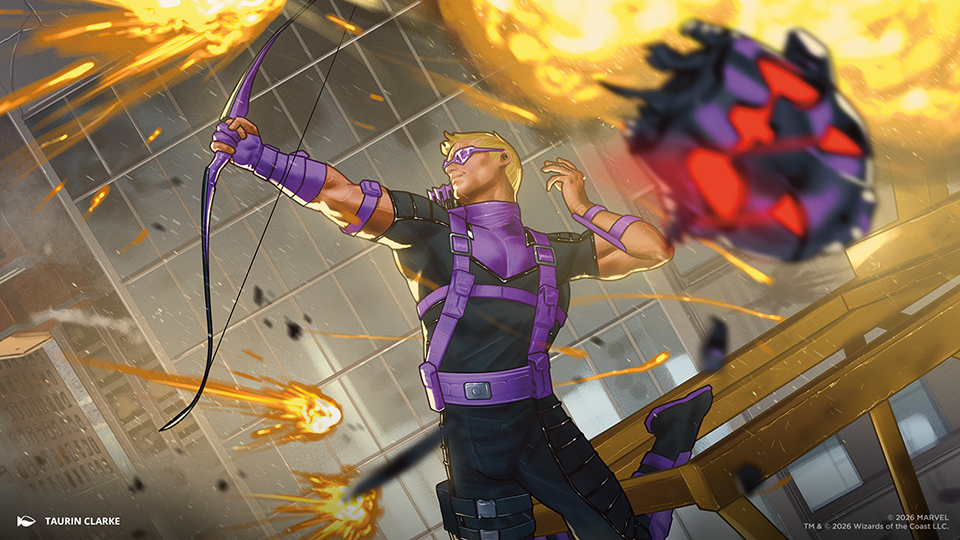
The vision handoff document concluded with targeted design goals for iconic legendary characters across various rarities. Profiles were established for heroes like Hawkeye, Wiccan, Falcon, Okoye, Patriot, Invisible Woman, Mockingbird, Iron Lad, Stature, Shuri, Justice, Protector, Kid Loki, Valkyrie, Moon Knight, Kingpin, Mister Fantastic, and Luke Cage to ensure their mechanical identities matched their comic book origins.
