
Trekking Through Design
Lead game designer Gavin Verhey details the creative and mechanical evolution behind the upcoming Star Trek crossover set. Learn how the design team captured the spirit of the iconic sci-fi series using scaling mechanics, moral dilemmas, and thematic Limited draft archetypes.
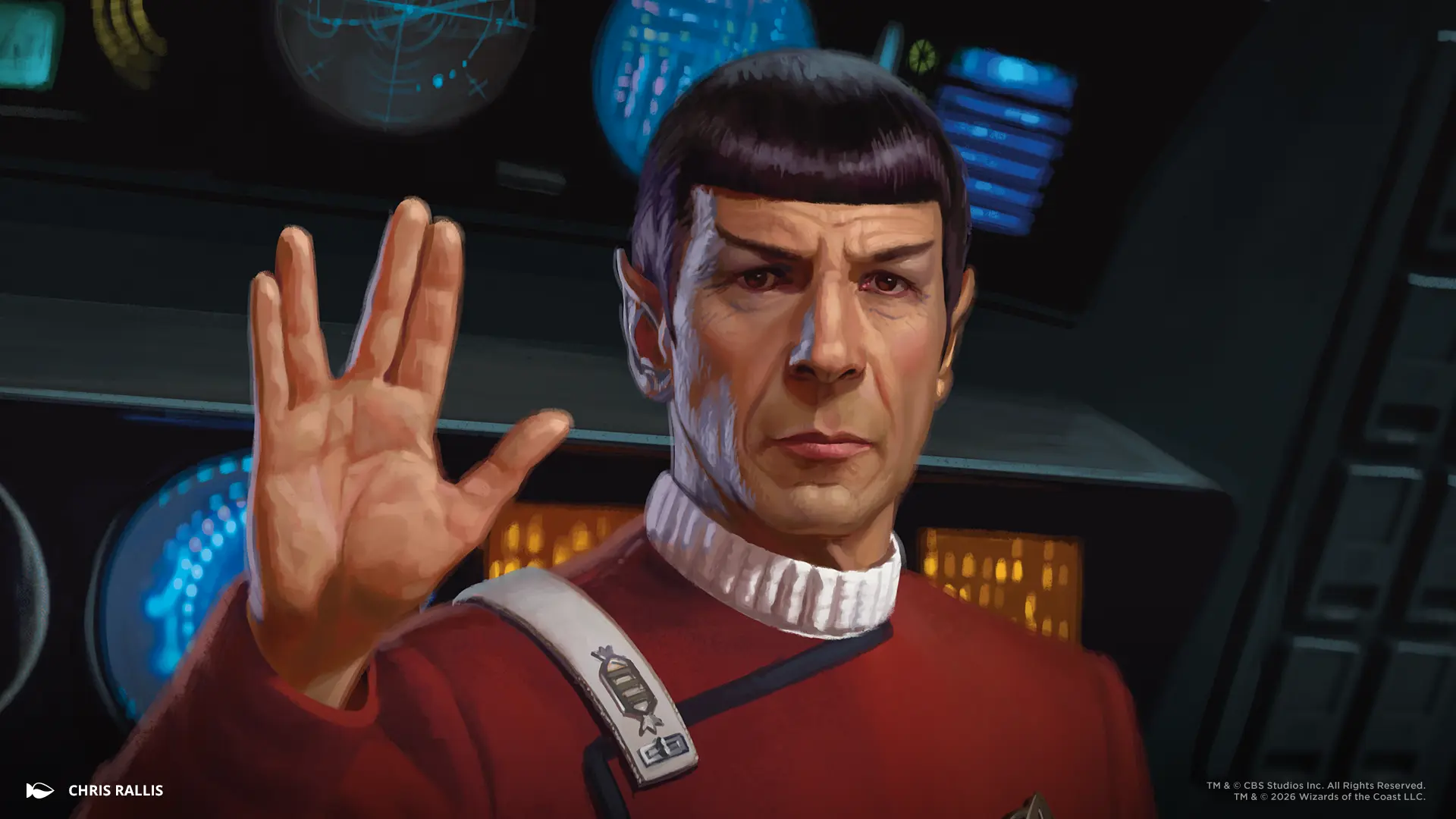
- Gavin Verhey served as lead game designer for the Magic: The Gathering Star Trek set.
- Ethan Fleischer led vision design, set Commander decks, and designed Scene Boxes.
- Limited features ten dual-color archetypes combining mechanical and lore themes.
- Set features custom mechanics including strange new worlds, dilemmas, and Spacecraft.
Assembling the Starfleet Design Crew
Bringing an iconic franchise to life requires a balanced crew of veteran designers and devoted fans. Ethan Fleischer kicked off the process as the vision design lead, laying down the set's foundations before transitioning to lead the Commander decks and Scene Boxes. He was joined early on by Sara, who designed the thematic spell Live Long and Prosper, and Mark Gottlieb, whose love for Deep Space Nine ensured heavy representation for the series, including cards like Captain Benjamin Sisko.
The design pipeline also relied on key technical expertise to balance draft and constructed formats. Lukas helped figure out how to represent dilemmas and Spacecraft early on, while Play Design masters Michael Hindy and Chris co-led the Limited balance effort. Veteran designer Dave Humphrey provided early directional guidance, Jeremy pitched inventive concepts like planeswalker tokens - similar to the empower Jace execution on Reality Fracture - and Jadine balance-tested late-stage designs, including Q, Stacking the Deck.
Designing Build-Up Gameplay Mechanics
Capturing the essence of Star Trek presented a unique design puzzle. While traditional games focus on aggressive combat and direct damage, the source material revolves around exploration, debate, and problem-solving. To translate this into gameplay, the team embraced a slow build-up structure reminiscent of older releases, allowing players to scale their power over time rather than relying strictly on early aggression.
Spacecraft cards were integrated to reward long-term planning, granting immediate value before building up into massive turning points. Meanwhile, aggressive players still have options, such as the Red-Black Klingon draft deck, ensuring classic combat strategies remain viable alongside the set's more deliberate archetypes.
Exploring Worlds and Facing Choices
Exploration is central to the set, leading to the creation of the strange new worlds mechanic. Rather than using existing keywords that take up substantial rules text, this mechanic rewards players for controlling lands with different names. Draft players can even throw off-color basic lands into their decks to ramp up their count, while Commander players naturally benefit from their varied mana bases.
Moral dilemmas are captured through modal choice cards that utilize flavor words, such as Kobayashi Maru Scenario. The set introduces the face a dilemma mechanic, which triggers powerful bonuses whenever you cast a spell or activate an ability with choices. Legendary creatures interact with this dynamic in flavor-appropriate ways; Seven of Nine draws a card when you face a dilemma, while Captain Benjamin Sisko creates Officer creature tokens to represent consulting his crew. The mechanic is fully backward-compatible with older modal spells, instantly synergizing with classics like Cryptic Command and Vision Charm.
Draft Archetypes and Species Diversity
Draft environments are split into ten distinct color pairs, each pairing a mechanical strategy with a thematic flavor. White-Blue centers on Spacecraft and Artificers, Black-Blue plays Dilemma Control, Black-Red features Klingons and sacrifice triggers, and Red-Green focuses on Away Team Landfall. Other pairs include Green-White Doctors and Counters, White-Black Borg Artifact Creatures, Blue-Red Scientists and Noncreatures, Black-Green Archaeology Graveyard, Red-White Command with eight or more total power, and Green-Blue Strange New Worlds.
To honor the source material, the design team avoided using the generic Alien subtype. Cards draw from established types like Elemental for a Horta or Dinosaur for Saurian Explorer, but many unique species receive custom creature types to preserve accuracy. This specific decision ensures characters such as Phlox, Unorthodox Doctor accurately reflect their identity on the card line.


